Lawn Dethatching 101: Cost, Timing & Your Sprinklers
Wondering if your lawn needs dethatching and if it’s safe for your sprinklers? Here’s what it costs, when to do it, and how it affects your irrigation system.
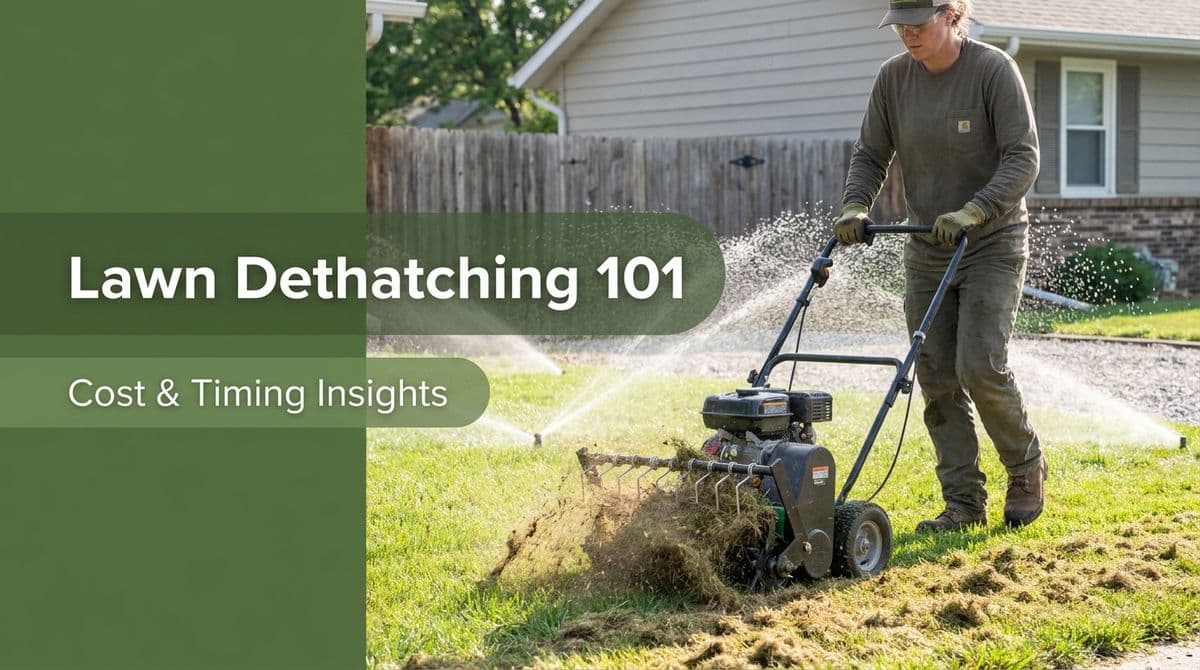
“Can You Dethatch My Lawn… and What About My Sprinklers?”
We recently got a call from a homeowner — we’ll call him Mark — who opened with a simple request: “I’d like to get my yard dethatched.” His lawn hadn’t been dethatched in about 20 years, and he was ready to finally tackle it.
Mark’s yard was a pretty average-sized lot in a typical neighborhood, and he had two main questions:
- How much will dethatching cost?
- Will dethatching hurt my sprinkler system?
We walked him through the answers on the phone, and we thought it would be helpful to share that same guidance here for any homeowner wondering about lawn dethatching, cost, timing, and sprinklers.
What Is Lawn Dethatching & When Do You Need It?
Thatch is the layer of dead grass, roots, and debris that builds up between the soil and the green blades you see on top. A thin layer is normal and even helpful. The trouble starts when that thatch gets too thick.
In Mark’s case, the lawn hadn’t been dethatched in two decades. Signs that you may be in the same boat include:
- Spongy feeling when you walk on the lawn
- Brown patches even when you’re watering regularly
- Water running off instead of soaking in
- Lots of dead material at the soil line when you part the grass
If the thatch layer is more than about ½ inch thick, a power rake or dethatcher can help remove that buildup so water, air, and nutrients can finally reach the roots again.
Best Time of Year to Dethatch
When Mark called, we were scheduling a full day of dethatching on a Monday in early May. That’s right in the sweet spot for many cool-season lawns.
As a general rule:
- Cool-season grasses (like Kentucky bluegrass and fescue): Early spring or early fall, when the grass is actively growing and can recover quickly.
- Warm-season grasses (like Bermuda or zoysia): Late spring to early summer, once the lawn has fully greened up.
You can technically dethatch outside these windows, but recovery will be slower and the lawn may look rougher for longer.
How Much Does Lawn Dethatching Cost?
When Mark asked about price, we looked at the size of his yard — a normal residential lot — and gave him a range of $150 to $200. For most average yards, that’s where dethatching tends to land.
Here’s what usually affects the cost:
- Yard size – Bigger lawns cost more than small front-only jobs.
- Thatch thickness – A lawn that hasn’t been touched in 20 years can take more passes and cleanup than one lightly maintained every few years.
- Cleanup and hauling – Dethatching produces a surprising amount of debris; bagging and hauling it away factors into the price.
We often quote a range, just like we did with Mark, so we’re not way off once we see the lawn in person. For many homeowners, that range is all they need to decide whether to move forward and get on the schedule.
Will Dethatching Damage Your Sprinkler System?
Mark’s next question is one we hear a lot: “I have a sprinkler system… is dethatching going to hurt it?”
The short answer is no, dethatching normally does not damage sprinkler systems, especially if the system is off and the heads are retracted, like Mark’s was. There are a few key reasons:
- Depth – Dethatchers work at the surface, pulling up thatch and dead grass. They don’t dig deep into the soil like an aerator.
- Sprinkler head design – Most heads sit slightly below the soil line when off, so the tines pass over them.
Dethatching vs. Aerating Around Sprinklers
On the phone, we explained to Mark that we treat aerating and dethatching differently around sprinkler systems:
- Aerating: We always mark sprinkler heads because the tines go deeper and there’s more risk of contact.
- Dethatching: We usually don’t need to mark heads; working at the surface is generally safe for sprinkler lines and heads.
That said, if you know you have shallow lines, raised heads, or unusual fixtures, let us know before we start so we can take a closer look and work around anything vulnerable.
How Dethatching Affects Watering & Sprinkler Performance
While dethatching itself doesn’t typically harm your sprinkler system, it does change how your lawn responds to watering — usually in a good way.
Once that thick layer of thatch is gone, you’ll usually see:
- Better water absorption – Less runoff and more water reaching the root zone.
- More even coverage – Sprinkler water isn’t getting trapped in the thatch layer.
- Improved efficiency – You may be able to water slightly less often once the lawn recovers.
We often recommend checking your sprinkler coverage after dethatching. Run a normal cycle and look for dry spots or puddling; you might need minor head adjustments now that water can get down into the soil more easily.
Simple Prep Tips Before We Dethatch Your Lawn
When we scheduled Mark for that Monday dethatching run, we asked him to do just a couple of easy things beforehand. The same checklist will help your project go smoothly:
- Turn your sprinkler system off the day before, so nothing accidentally pops up.
- Pick up hoses, toys, and decorations so we have a clear path.
- Mow the lawn slightly shorter than usual (but don’t scalp it); this helps the dethatcher reach the thatch layer.
With those simple steps, we can focus on getting the thatch out efficiently and leaving your lawn ready for its next growth spurt.
Thinking About Dethatching Your Lawn?
If your yard feels spongy, looks tired, or just hasn’t been dethatched “in about 20 years” like Mark’s, it might be time. We’re happy to take a look, give you a clear price range based on your actual lawn, and answer any sprinkler-specific questions before we start.
Fill out the estimate form on our website, and we’ll get you on the schedule for a day dedicated to bringing lawns back to life — without putting your sprinkler system at risk.