Retaining Walls for Sloped Backyards Near Wetlands
Backyard falling toward a wetland? Learn when to replace old timber retaining walls, smarter material choices, and how to add ramps or steps for easier access.
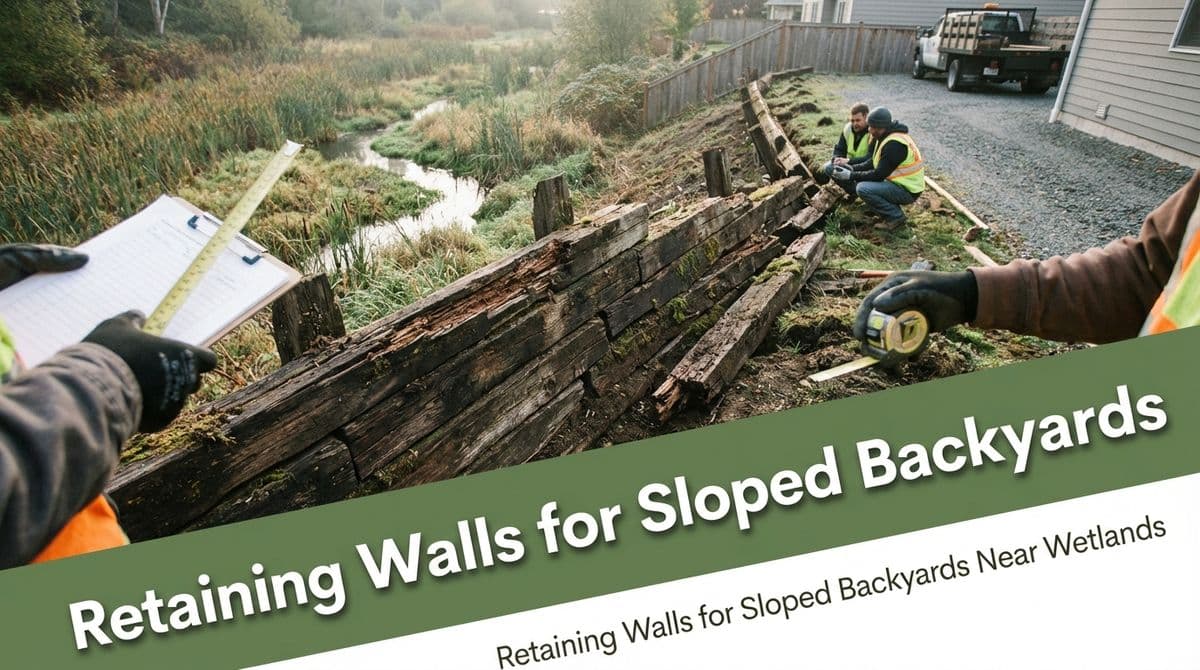
When Old Timber Retaining Walls Start Letting Your Yard Slide
We recently got a call from a homeowner — let’s call him Brent — whose backyard backs up to a wetland. His first words were, “My backyard is falling away because the old timbers are all rotted.” If you live on a sloped lot or along a wetland edge, that probably sounds familiar.
Brent had an aging timber retaining wall that was supposed to hold his yard level above the wetland. Instead, the wood was rotting, the yard was slumping, and he was climbing awkward steps just to get his mower down to the lower area. He wanted to know: Is it worth replacing the wall? What are his options? And could we add a ramp instead of those awkward steps?
We see this situation all the time, so we figured it was worth breaking down what’s going on, what your options are, and how we handle tricky access behind fences and near wetlands.
Signs Your Timber Retaining Wall Is Failing
Timber walls don’t last forever, especially when they’re near moisture like wetlands. Here are some of the early warning signs we look for when we walk a property like Brent’s:
- Rotting or soft wood: Boards crumble when you poke them, or you can peel off layers with your hand.
- Bulging or leaning sections: Parts of the wall bow out toward the yard or tip forward toward the lower level.
- Gaps between timbers: Spaces open up where soil can leak through, especially after heavy rain.
- Exposed nails, spikes, or plates: Hardware is pulling out of place as the wood loses its strength.
- Soil movement: The top of your yard is sinking, or the slope below is building up with eroded soil.
If you see a combination of these, your wall isn’t just old — it’s actively losing its ability to hold back the yard.
Risks of Letting a Rotten Wall Keep Failing
Brent mentioned he wasn’t sure how hard it would be to rip out the old wall and wondered if it could just “rot where it is.” It’s a common thought, but letting a failed wall sit usually causes bigger headaches.
Here’s what can happen if you leave it:
- Faster erosion: Once the wall stops doing its job, rainwater starts carving away the slope, carrying soil into the wetland.
- Trip hazards and sink spots: Settling ground along the top of the wall can leave dips and soft spots under turf or patios.
- Damage to fences and structures: If your fence or shed is near the wall, shifting soil can tilt posts and crack concrete.
- Higher replacement cost later: The more soil you lose, the more rebuilding and backfilling we have to do to restore the yard.
In short, once a timber wall starts to go, it’s usually best to plan a replacement on your terms instead of waiting for a partial collapse.
Replacement Options: Block vs. New Timber (and More)
Brent asked whether a block wall or a new wood wall made more sense for his yard. We walked him through the pros and cons we typically share with homeowners.
Segmental Block Retaining Walls
Pros:
- Much longer lifespan than timber when installed with proper base and drainage.
- Resistant to rot and insects, ideal near wetlands or constantly damp soils.
- Clean, finished look with a range of colors and textures.
- Engineered systems that can be built taller with proper design.
Cons:
- Generally higher upfront cost than wood.
- Requires solid base prep; not a great DIY project for most homeowners.
New Timber Retaining Walls
Pros:
- Usually less expensive upfront.
- Faster to install in some smaller or low-height applications.
- Can fit a more rustic, natural aesthetic.
Cons:
- Shorter lifespan, especially near wetland edges where moisture is constant.
- Can twist, crack, or warp over time.
- Will eventually face the same rot issues you’re dealing with now.
For lots like Brent’s — sloped, wetland-adjacent, and meant to stay level for the long haul — we usually recommend a block wall with proper drainage. It’s a bigger investment up front, but it’s built to last in a wet environment.
How We Handle Tricky Access Behind Fences
One of Brent’s concerns was access: he had a double gate, but the path to the backyard was tight. He even mentioned pulling a fence post to get a small machine through. This is another common issue on suburban lots.
Here’s how we typically deal with it:
- Walk-behind or compact equipment: We often use smaller skid steers or mini loaders designed for narrow access.
- Temporary fence removal: If needed, we can remove a panel or post and restore it after the job. We plan this ahead so you’re not left with surprise repairs.
- Material staging: We stage block, base rock, and soil so we minimize trips through the gate and protect lawns as much as possible.
- Yard protection: Mats or plywood help prevent ruts where machines travel.
When we schedule a visit, we always look at access first so we can give you a realistic plan and price.
Design Upgrades: Ramps, Steps, and Better Access
Brent had one more request: “Where the gate is, I’d like maybe a ramp so I can get my mower down there easier instead of going down the steps.” That’s a smart time to think about access — while you’re already rebuilding the wall.
Here are a few upgrades we often suggest for sloped, wetland-edge yards:
- Integrated mower ramp: A gently sloped path, built with compacted base and pavers or turf, so you can drive your mower to the lower level without dragging it down steep steps.
- Wide, stable steps: If space doesn’t allow a ramp, we can build wider, even steps with solid risers and treads for comfortable walking.
- Level “landing” areas: Flat spots at the top and bottom of steps or ramps make turning with equipment much easier.
- Handrails or edging: For steeper sections, simple railings or raised edging keep people and mowers where they’re supposed to be.
In Brent’s case, the plan is to rebuild the retaining wall, level the yard off so it’s not dropping away, and work in a mower-friendly access point near the gate. That way the yard is both stable and easy to maintain.
Thinking About Replacing Your Old Timber Wall?
If your backyard backs up to a wetland or a steep slope and your timbers are starting to rot, you’re not alone. We’re happy to come out, take a look — even if you’re not home — and talk through your options for a new wall, better drainage, and smarter access.
Whether you go with block or new timber, the key is getting the structure, base, and layout right the first time so your yard stays level and usable for years to come.